How Claude and Anthropic are leading the AI race is a question most coverage answers with the wrong scorecard, focusing on chatbot rankings and benchmark headlines rather than the commercial layer where the real competition is being won. The mistake most teams make when evaluating AI vendors is treating model capability as the primary differentiator. This article examines the architectural, strategic, and operational reasons Claude is becoming the default choice in regulated-industry workflows, and where Anthropic's position remains genuinely fragile.
Key Takeaways
- Enterprise revenue is the real scoreboard: Anthropic surpassed OpenAI in annualized revenue run rate in April 2026, driven by business customers who now account for the majority of its revenue, not consumer subscriptions.
- Claude's refusal behaviour is a procurement asset, not a product limitation: For compliance teams in financial services, healthcare, and legal, a model with a publicly auditable governance framework reduces legal risk at the workflow integration layer in ways that unconstrained models cannot.
- Infrastructure dependency is Anthropic's most credible structural risk: Anthropic owns no chips and no data centres. If you are building long-term workflow automation on Claude, your vendor stack assessment must account for that dependency before you commit.
Is Anthropic Actually Winning the AI Race?
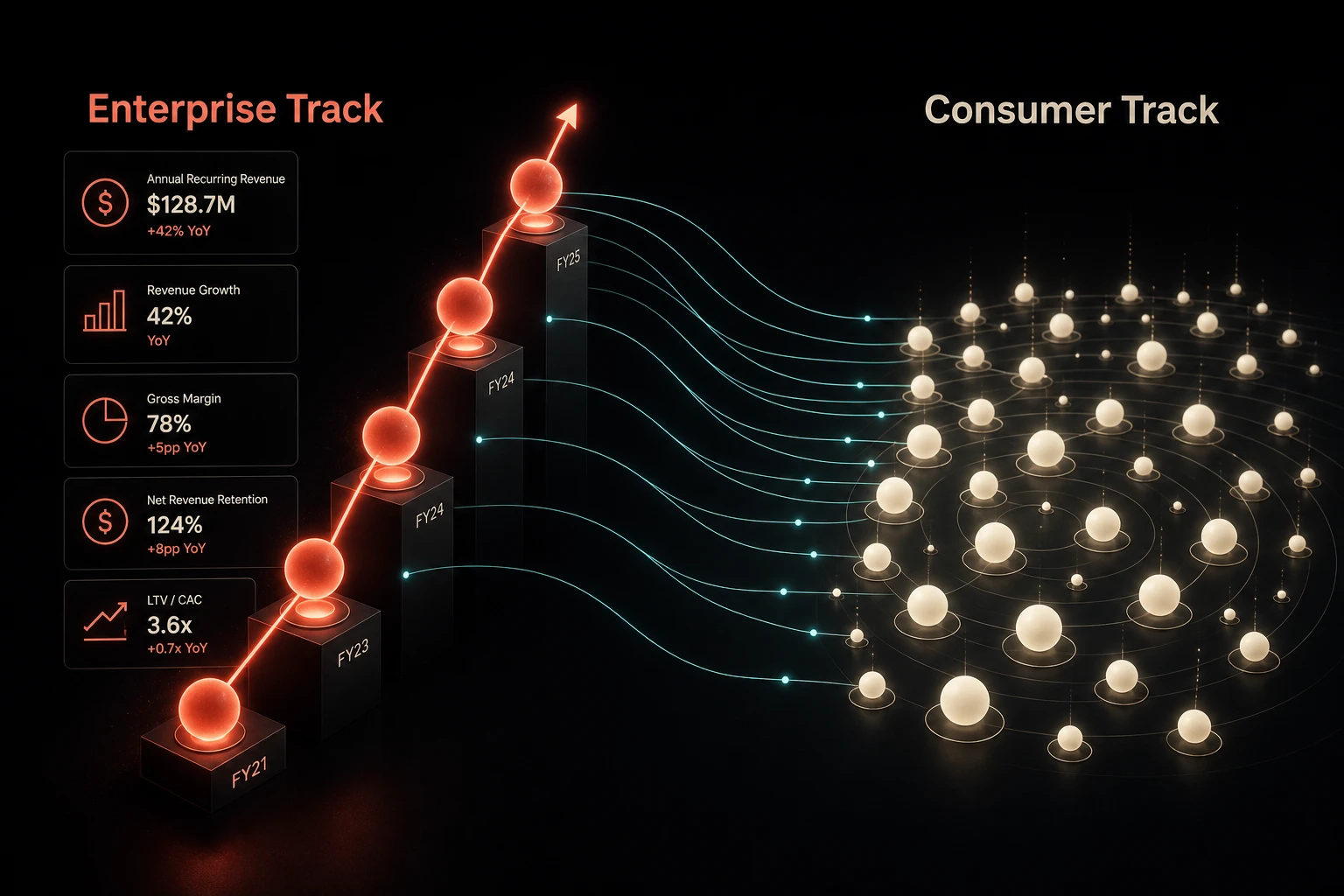
Anthropic is leading the enterprise track of the AI race, which is the commercially decisive one in 2026. That is distinct from the consumer chatbot war, where OpenAI's ChatGPT retains the largest user base by volume. In April 2026, Anthropic surpassed OpenAI in annualized revenue run rate, reaching $30 billion, up from $1 billion fifteen months earlier. The company that wins the enterprise workflow layer wins durable, high-margin contracts. That is the track Anthropic has chosen, and the numbers currently support the bet.
Two Separate Races
The consumer market rewards brand recognition, ecosystem lock-in, and free-tier distribution. About 65% of OpenAI's revenue comes from consumer subscriptions, and ChatGPT has over 200 million weekly active users. That scale is real, but it is a different competition entirely from enterprise procurement. Enterprise growth has been the primary engine for Anthropic, with business clients accounting for roughly 80% of total sales.
Valuation and Revenue Context
The Series H closed on 28 May 2026, with $65 billion raised at a $965 billion post-money valuation, led by Altimeter Capital, Dragoneer, Greenoaks, and Sequoia Capital. Both figures are from Anthropic's own announcement. That valuation sits above OpenAI's reported $852 billion, making Anthropic the most valuable private AI company. Valuation alone is not proof of winning, but the revenue structure underneath it is. Anthropic disclosed that its annualized revenue run rate surpassed $30 billion and the number of customers spending more than $1 million annually exceeded 1,000, reinforcing Claude's position as one of the fastest-growing enterprise AI platforms.
"Anthropic was able to overtake OpenAI not by relying on superior model capabilities, but by tapping into an area OpenAI failed to cultivate deeply: enterprise developer workflows and compliance-first procurement." — Synthesis across enterprise adoption data, 2026
What Claude Does Differently at the Model Level
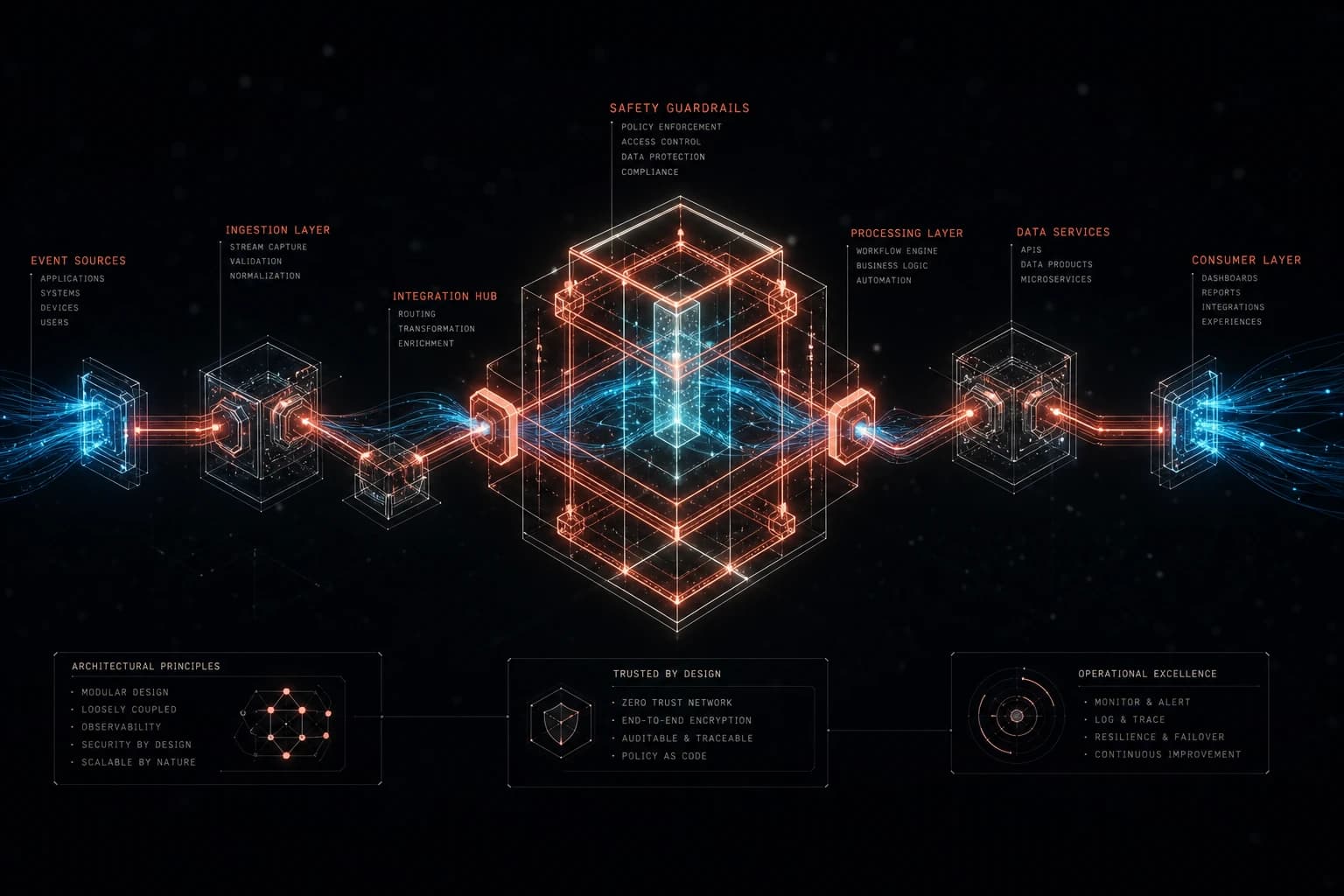
Anthropic is betting that the future of enterprise AI lies beyond bigger models. Executives reveal that Claude Science, AI agents, and a governance-first strategy are pushing Claude into scientific research and financial services workflows. From drug discovery to KYC screening, the company says the real competition is no longer model capability but the workflow and control layers that determine whether banks, insurers, and pharmaceutical firms can trust AI with consequential work.
Constitutional AI and Compliance Teams
Anthropic published a comprehensive new constitution for Claude in January 2026, shifting from rule-based to reason-based AI alignment that explains the logic behind ethical principles rather than prescribing specific behaviours. The framework establishes a four-tier priority hierarchy: safety, ethics, compliance, and helpfulness. For enterprise compliance teams, this is not philosophical posturing. As enterprises in regulated industries adopt frontier models, a stable, auditable, and transparent safety policy becomes a critical procurement factor. Anthropic is betting that explicit, predictable behaviour is more valuable to the enterprise market than unconstrained capability. Enterprises and their compliance teams now have a tangible artifact to evaluate against corporate policy and frameworks like the EU AI Act or NIST AI RMF.
Pro Tip: When running a vendor review for AI automation, ask every model provider for a written governance document that maps their safety policy to the EU AI Act or your sector's regulatory framework. Anthropic's published constitution gives procurement teams a concrete artefact most competitors cannot match.
Long Context in Document-Heavy Workflows
In practice, the context window advantage matters more than most benchmark tables suggest. Enterprise engineering teams processing large codebases, legal documents, or financial reports benefit significantly from Claude's extended context. The 1M context window eliminates the need for complex chunking strategies and RAG pipelines that add latency, cost, and failure points. Fewer pipeline components mean fewer failure modes, which matters considerably in production workflows with SLA commitments.
Refusal Behaviour as a Risk Management Feature
The counterintuitive finding that emerges consistently across regulated-industry deployments: Claude's willingness to refuse certain tasks is an asset, not a limitation. Anthropic has published the formal constitution for its Claude AI models, transforming its internal Constitutional AI research method into a public, auditable governance framework. The move explicitly enables the AI to refuse orders that conflict with its principles, establishing a new benchmark for transparency in the race for enterprise-grade AI. A model that refuses predictably is one that legal teams can underwrite. A model that complies with anything is a liability exposure.
Governance framework — Claude (Anthropic): Published 79-page constitution, publicly auditable · OpenAI (GPT-series): Safety policy, not fully public. Recommended for: Regulated industries requiring audit trails.
Context window — Claude (Anthropic): Up to 1M tokens · OpenAI (GPT-series): Up to 128K tokens (GPT-4o). Recommended for: Legal, financial, and code-heavy document workflows.
Refusal calibration — Claude (Anthropic): Reason-based, documented in constitution · OpenAI (GPT-series): Rule-based, less transparent. Recommended for: Compliance teams requiring predictable output scope.
Enterprise revenue share — Claude (Anthropic): ~80% of total revenue from business customers · OpenAI (GPT-series): ~35% estimated from enterprise. Recommended for: Vendors whose product roadmap is aligned with B2B use cases.
$1M+ annual customers — Claude (Anthropic): Over 1,000 confirmed · OpenAI (GPT-series): Not publicly disclosed. Recommended for: Organisations benchmarking vendor stability and scale.
Why Enterprises Are Choosing Anthropic Over the Alternatives
What we consistently see across enterprise AI automation evaluations is that the procurement decision rarely comes down to which model scored higher on a public benchmark. Three criteria dominate the final vendor selection: auditability, output predictability, and vendor trust. None of these appear as primary differentiators in most model comparison articles, yet they are the factors that determine whether a deployment gets past a legal review.
- Auditability: Claude's published constitution gives compliance teams a document they can reference in risk assessments, supplier due diligence questionnaires, and regulatory audits. Competitors relying on opaque safety policies cannot offer the same artefact.
- Output predictability: Regulated workflows require that the model behaves the same way across repeated prompts. The constitution future-proofs against regulatory changes. Analysts have noted that clearer AI governance and built-in oversight can significantly reduce long-term compliance and audit complexity. When the EU AI Act mandates human oversight for high-risk AI, Anthropic's framework already embeds this principle. Companies using Claude will already have the foundation built in.
- Vendor trust: Anthropic leads on enterprise trust in a way that OpenAI, whose revenue is still weighted toward consumer subscriptions, has not yet replicated. Trust is not sentiment. It is the result of consistent behaviour over time, and Anthropic's safety-first positioning has been in place since the company was founded.
For the first time since the AI race began, more American businesses are paying for Anthropic's Claude than for OpenAI's ChatGPT. Adoption of Anthropic rose 3.8% in April to 34.4% of businesses according to the May 2026 Ramp AI Index. OpenAI's adoption fell 2.9% to 32.3%. That crossover is the market confirming what enterprise procurement teams have been quietly signalling for over a year.
Further reading: How to evaluate AI tools for enterprise automation
Where Anthropic Is Still Vulnerable
A credible analysis of Anthropic's position requires honest accounting of its structural weaknesses. The enterprise revenue lead is real. So are the vulnerabilities.
Compute Ownership and Infrastructure Dependency
Anthropic does not fabricate chips. It does not own data centres. It does not set power-contract terms the way Google does through its own TPU programme. When a supply crunch hits, Anthropic has no fallback layer that belongs to it. The company is addressing this: Anthropic has initiated a hiring drive for an in-house chip design team, signalling its entry into custom silicon development for Claude AI. This move is driven by the arithmetic of serving billions of tokens daily at a $30 billion revenue run-rate, aiming to co-design hardware and models for efficiency and cost reduction per query. That is a multi-year programme, not a near-term fix.
Watch Out: Every major cloud provider funding Anthropic, including Google and Amazon, also runs a competing model. Every arrow in that diagram comes from a company that also runs or backs a competing model. Google has Gemini. Microsoft has Copilot. For enterprise buyers building multi-year automation stacks on Claude, that dependency structure deserves explicit scenario planning.
Distribution Gaps Versus OpenAI
OpenAI's consumer reach is a distribution moat that Anthropic has not closed. Developer communities, consumer brand recognition, and Microsoft's enterprise sales force give OpenAI a top-of-funnel advantage that Anthropic's partner network is only beginning to compete with. In March, Anthropic committed $100 million to the Claude Partner Network, funding training, technical support, and joint deployment programmes. Closing the distribution gap at enterprise scale takes years, not quarters. Anthropic's current enterprise lead is built on direct relationships and safety positioning, not broad market distribution.
Further reading: Ten data-backed reasons Anthropic could still lose the AI race
What Anthropic's Position Means for Businesses Adopting AI Workflows
The competitive landscape analysis matters to you as a decision-maker only insofar as it changes which model you select and how you architect your automation stack. The mistake most teams make here is treating model selection as the primary decision. It is one layer of a larger architecture question, and workflow design, integration depth, and governance structure determine ROI far more than raw model performance.
Where Claude Excels and Where It Does Not
In financial services, Claude connects to financial data providers and Microsoft applications, while agents handle workflows such as credit memos, KYC screening, and financial analysis inside banks and insurers. That is the sweet spot: long-document processing, multi-step agentic workflows with audit requirements, and regulated-industry tasks where refusal predictability reduces legal exposure. Where Claude is less naturally suited is in consumer-facing applications where brand recognition and ChatGPT's installed base create switching costs for end users who already have a preference.
Three Questions to Ask Before Committing to Any AI Vendor Stack
- Can you audit the model's decision logic? If your compliance or legal team cannot point to a governance document that maps model behaviour to your regulatory framework, the deployment carries unquantified risk regardless of how well the demo performed.
- Who owns the infrastructure your vendor depends on? Identify whether your chosen provider's compute capacity is controlled by a company that also competes with them. That dependency is a business continuity risk that standard vendor risk questionnaires do not capture.
- Does the model's output format match your workflow's handoff requirements? In practice, output predictability at the structured-data layer matters more than benchmark scores. A model that returns consistent JSON or structured markdown reduces downstream engineering overhead in ways that raw accuracy numbers do not reflect.
These questions apply regardless of which model you select. If you are deploying AI workflows across operations, finance, or compliance functions, the model is one variable. The workflow architecture around it determines whether you extract value or accumulate technical debt. Explore AI workflow automation services for B2B teams to understand how the integration layer should be structured before you commit to a vendor.
Further reading: Inside Anthropic: Moving beyond bigger AI models to win the enterprise AI race
Frequently Asked Questions
Is Anthropic winning the AI race against OpenAI?
Anthropic is winning the enterprise track of the AI race. On the consumer track, OpenAI retains the largest user base by volume. By revenue, Anthropic surpassed OpenAI's annualized run rate in April 2026 and now holds a higher private valuation at $965 billion versus OpenAI's $852 billion. The meaningful differentiator is revenue structure: approximately 80% of Anthropic's revenue comes from business customers, compared to OpenAI's consumer-heavy mix.
Why are enterprises choosing Claude over other AI models?
Three criteria consistently drive enterprise procurement toward Claude: auditability through a publicly published governance constitution, output predictability that allows compliance teams to underwrite deployments, and vendor trust built through a consistent safety-first position since the company's founding. In regulated industries such as financial services, healthcare, and legal, these factors outweigh raw benchmark performance at the point of vendor selection.
What makes Anthropic's approach to AI different from its competitors?
Anthropic treats safety not as a constraint on capability but as a commercial strategy. The company published a 79-page Constitutional AI framework in January 2026 that encodes the reasoning behind refusal decisions, not just rules. This shifts AI governance from an opaque internal policy to a publicly auditable document that enterprise compliance teams can evaluate against the EU AI Act, NIST AI RMF, and sector-specific regulatory requirements. No major competitor has published a comparable framework.
The Bottom Line for AI Vendor Decisions
Anthropic is leading the commercially decisive track of the AI race, enterprise workflow adoption, because its architectural choices around safety and output predictability solve problems that unconstrained models cannot. The revenue numbers, the governance framework, and the enterprise adoption crossover all point in the same direction. Anthropic's infrastructure dependencies and distribution gaps are real, and any honest vendor assessment must include them.
Model selection is one layer of the decision. Workflow architecture, governance alignment, and integration depth determine whether AI automation delivers ROI or creates new technical and compliance debt. Before you commit to a vendor stack, map the workflow requirements first, then select the model that fits them. If you are ready to move from evaluation to implementation, see how withSoch builds AI workflows for operations and compliance teams.